Nature’s first green is gold,
Her hardest hue to hold.
Her early leaf’s a flower;
But only so an hour.
Then leaf subsides to leaf.
So Eden sank to grief,
So dawn goes down to day.
Nothing gold can stay.
— R. Frost
When you hear someone talking about “investing in gold,” they are, most likely, talking about GLD, the ticker for SPDR Gold Shares.
GLD isn’t a commodity, though. It’s not even a stock.
It’s a barometer.
GLD is a shiny toy that gauges when things aren’t quite right, spiking in price during times of duress and cooling when normalcy, or at least its semblance, reigns.
“Gold is often viewed as a safe haven asset, with prices rising during periods of economic uncertainty or geopolitical instability.”
— Mankiw, N. Gregory. Principles of Economics, 9th Edition
In 2008, the housing market collapsed, banks failed, Congress passed a $700 billion bailout no one understood. Amongst the rubble, GLD doubled in less than two years, fueled by a distrust in the banks, the regulators, the dollar, the system.
In 2011, Washington flirted with a debt default, S&P downgraded the U.S. credit rating for the first time ever, and partisan gridlock made it clear that even basic governance was up for debate. Meanwhile, GLD surged to a then-all-time high. Not because gold had changed — but because people were asking, “What if nothing changes?”
Then came 2020. A pandemic shut down the global economy. The Fed slashed rates to zero. Congress injected trillions of dollars into the bloodstream of the market. Once again, GLD climbed. Because even though stocks were rallying, the smart money understood this wasn’t real growth; it was survival dressed up in stimulus.
And now, in 2025?
Inflation is “under control” — if you believe the government.
The market is “healthy” — if you ignore the layoffs, the strikes, and the consumer credit delinquencies.
The dollar is “strong” — until you look at what it buys.
And once again, GLD is rising, having hit new all-time highs multiple times in recent weeks.
INSERT BROOKINGS CHART
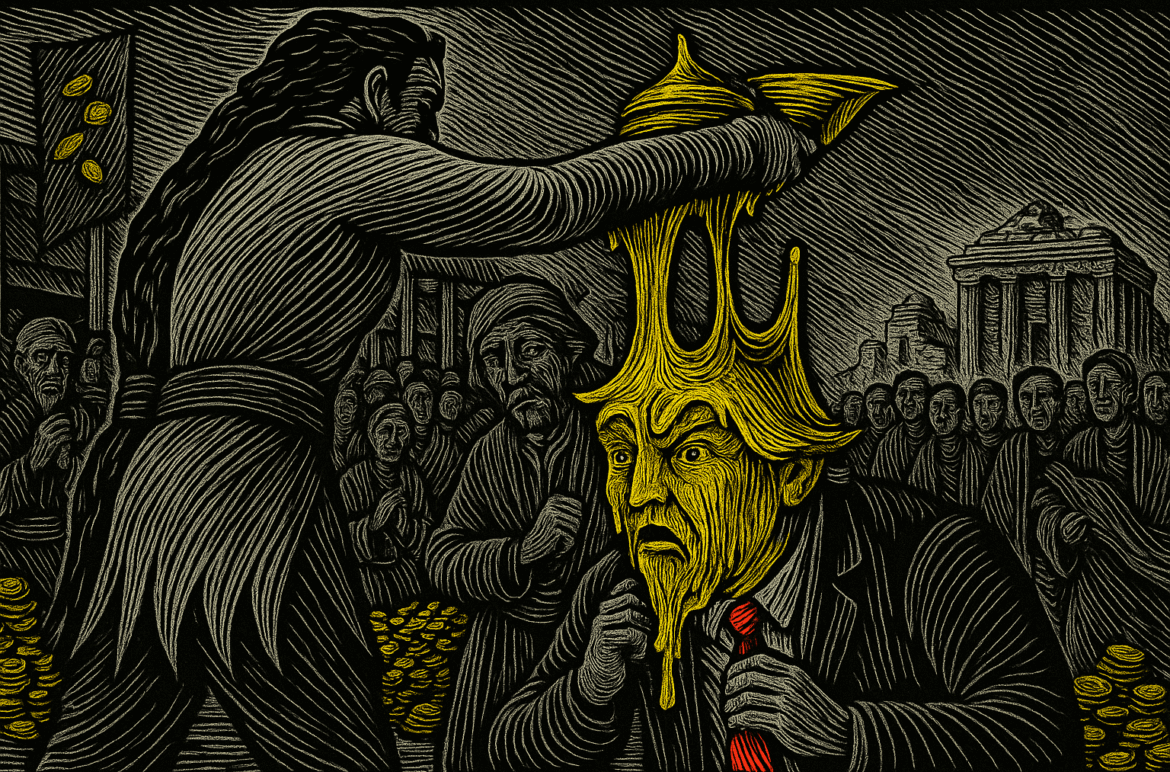
Gold is unwavering, impossible to ignore. It is discerning, piercing; garish, gauche.
It is, unsurprisingly, Trump’s favorite thing.
Gold shall be his eventual crown.
But, hear you me, to paraphrase a fellow prophet:
GLD will be Trump’s shroud.

Because GLD, in fitting irony, cannot be gilded.
You can only watch it shine brighter with each day the market sits in fog — and ask why.
And, with every percentile rise, the ones doing the asking are the exact people Trump is hoping won’t go snooping behind the aureate curtain.
Yes, “smart institutional money” is partly responsible for GLD’s current supremacy. Pension funds, endowments, and sovereigns quietly rebalanced back toward gold when the dollar cracked; quant funds and volume traders have been piling in on every rate-pivot whisper and macro dislocation; and old-school macro traders, the ones who made their careers shorting empires, have been clinging to GLD for months.
However, there’s also been a growing chorus of disillusioned everyday American investors who still believe in the sanctity of markets, even if they long stopped believing in institutions. They’ve tuned out the pundits, but they are more tuned into prices than ever. Some of them are crypto refugees. Some are Rogan listeners with a Schwab account. Some are apolitical FanDuel lifers who started toggling between parlays and commodities in between downs.
And they are all terrified at how much money they have been making on GLD.
Because with every passing day, as Trump’s signature spin on authoritarian capitalism has become more apparent, and as the market has punished him accordingly by clutching for more of that shimmering bedrock of truth, these barcalounger economists are watching the thing they know means “invest in case of emergency” climb up the charts and make headlines in even the most bull-tinted of outlets.
Politics is ending at the shores of Fidelity, and even I’m not sure which one I mean there.
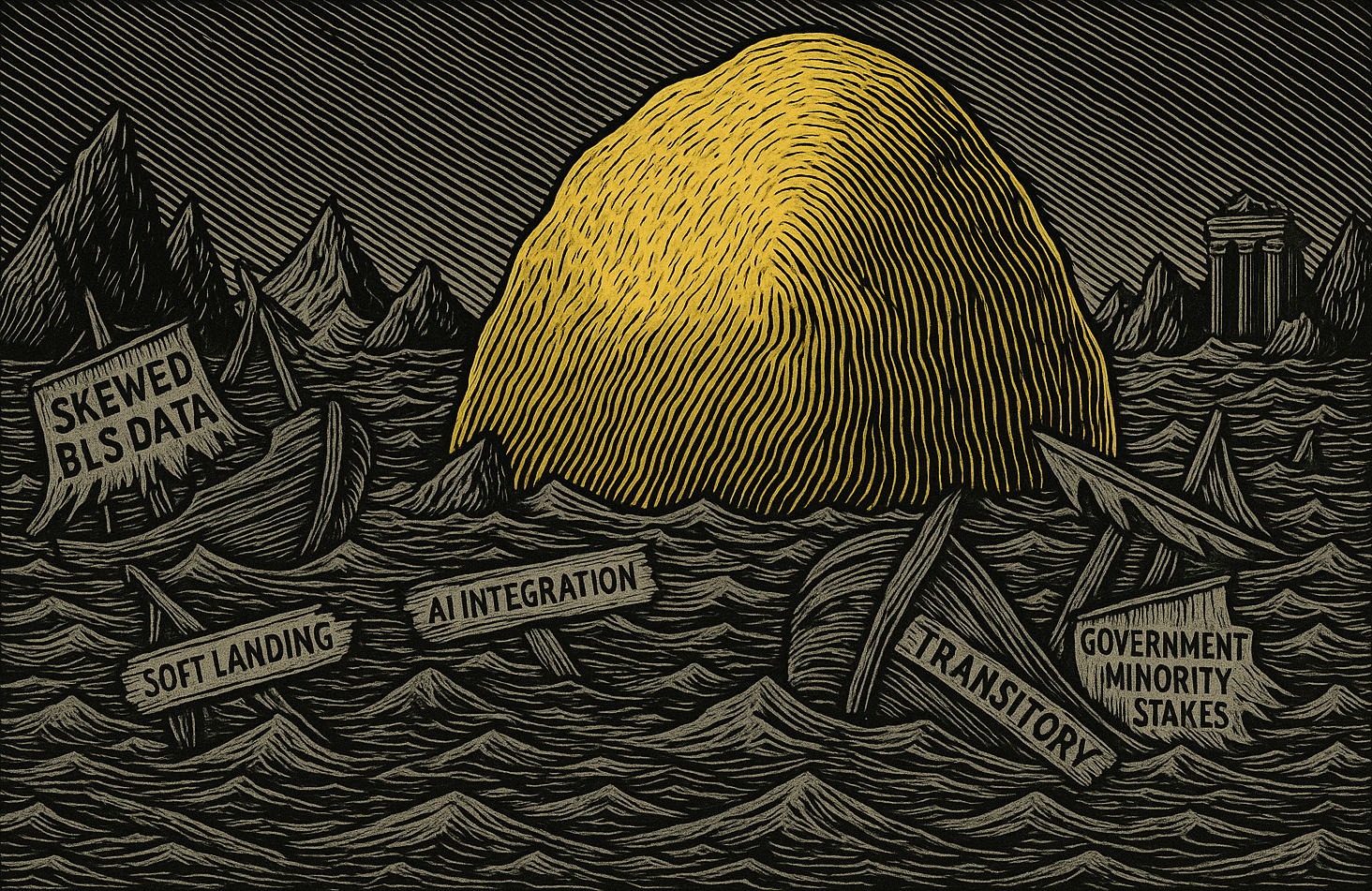
I do know a golden age Democratic strategist famously said never let a good crisis go to waste, and that this is a GLDen opportunity for effective persuasion, should the party be so bold.
If you’re a lost-in-the-wilderness liberal, this is your glistening opening to go where you know your target audience is, when they’re at their most vulnerable, and demonstrate you’re capable of feeling their unique pain; to bolster your “bombthrowing outsider” bonafides, while letting them know you can speak their native tongue.
To show that you’re paying attention.
The TikTok is there for the tik-taking:
A chart showing the booming trajectory of GLD
An Econ 101 textbook that reads, “Gold goes up when things are out of whack, and there’s no one in control.”
One of the countless clips in which Trump lies about the state of the economy
[repeat x2]
Overlay “Gold Dust Woman” by Fleetwood Mac if you’re going for Boomer audiences, “Goldie” by A$AP Rocky for the Millennials, or “GOLDWING” by Billie Eilish for Gen-Z. Then have someone twelve years younger than either of us rewrite the whole thing. Le fin.
Kitchen table issues in 2025 aren’t the same that they were even in 2022. And this audience? They’re eating over their kitchen counter, because, if they don’t, they’re going to get peri peri sauce on something important. And even if it is indeed the auspicious rise in their monthly electric bill that’s dinging their bank account the hardest, they’re not reckoning with their gross utility costs every time they pull up their phone for what used to be a reliable source of dopamine.
Goldwing angel,
Go home
Don’t tell anyone what you are
You’re sacred, and they’re starved
And their art is getting dark
And there you are to tear apart
Tear apart, tear apart
— B. Eilish
There is, of course, a catch to this strategy.
Because while I wasn’t lying before, GLD isn’t a commodity, it does represent the idea of the commodity that is gold. And like all commodities, gold is subject to that unforgiving intersection where supply meets demand.
And much the same way Americans have been eschewing natural diamonds for moissanite and lab-grown gems, the Indian weddings that have traditionally accounted for as much as half of global gold jewelry demand during peak seasons are now swapping in costume jewelry or foregoing precious metals entirely.
Likewise, in China, where gold has long been the vault beneath the family tree, and where households account for nearly a quarter of global gold demand, anxiety over the property market, youth joblessness, and the stability of their own currency has contributed to a noted stall in retail interest. In rare but telling moments, bullion dealers in Shanghai have actually been selling physical gold for less than the price quoted on global financial markets.
Meaning one can only “protest invest” against Trump’s plated fiction by hoarding GLD for so long before it becomes financially irresponsible to front-run reality with a tool never designed to be a weapon.
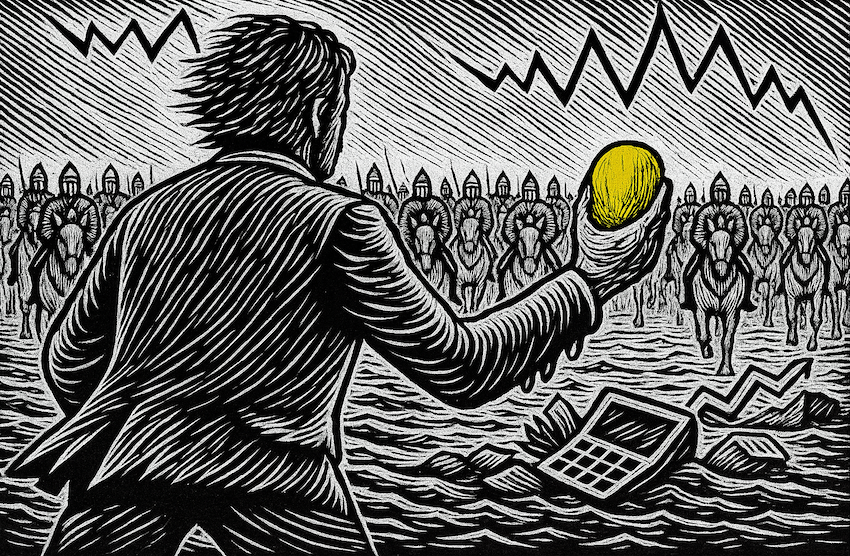
In a well-balanced portfolio during normal times, gold is supposed to be a ballast against catastrophe. It’s a hedge against the wretched unknown. A sacred vehicle.
But as 2026 looms, the financial arts are getting darker with the toll of every opening bell, more and more retail investors are noticing they’re starving, and GLD is poised to tear apart, tear apart, tear apart all manners of facades to reveal a singular cyclical truth:
Nothing gold can stay; so Eden sank to grief.